

@dawnawelsby7400
Profile
Registered: 1 week, 4 days ago
Peptide Testing
(image: https://as2.ftcdn.net/v2/jpg/05/35/89/05/1000_F_535890561_jy6rlvDsG8Or0aFaxMkKnheYJunI6ZBb.jpg)Utilizing a highly cleansed peptide reduces these dangers and enhances the dependability of your data. Nevertheless, attaining ultra-high pureness (state 99%) can be practically challenging and might not constantly be necessary, as we'll talk about later. The key is understanding what level of pureness is sufficient for your demands and how pureness is determined to begin with.
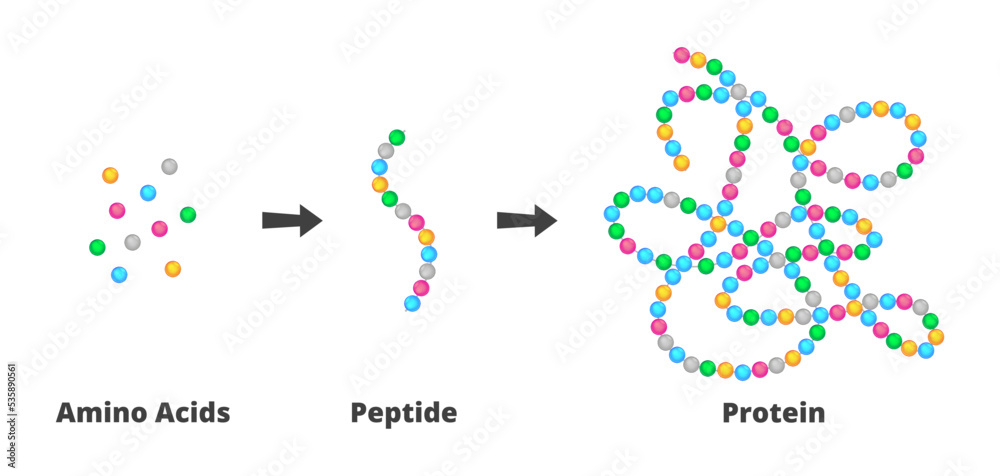
Maintaining a high level of purity is important due to the fact that impurities can impact bioassays or responses. For instance, trimmed peptides or chemically customized side-products might bind to targets or produce negative effects that confound your outcomes. Succeeding deterioration from improper storage, temperature exposure, or contamination during handling can lower top quality. The CJC-1295 Peptide USA storage overview covers proper handling that maintains top quality between testing and use.
A strong test record can sustain pureness, identity, and set traceability. It does not turn a study compound into a professional product, and it does not change speculative validation in the researcher's own system. The peptide example is liquified in a suitable solvent and packed into an autosampler. The injector presents a specific volume of example into the mobile-phase stream.
A number of independent research laboratories give peptide screening solutions.Recognizing exactly how to critically examine a COA-- and what the numbers really indicate-- is therefore an essential research proficiency.Since impurities usually differ from the target peptide by at the very least one amino acid, they have somewhat various hydrophobicities and show up as different tops on the chromatogram.Peptides from Maxed Out Substances are supplied solely for lab research use and are not intended for human or veterinary purposes.
Exactly How Does Lab Validation Secure Versus Peptide Fraud?
Poor-quality peptides (those with undiscovered pollutants, incorrect series, or deteriorated components) can bring about misleading data and irreproducible outcomes. As a matter of fact, proteins and peptides are among the most commonly utilized laboratory reagents, yet studies have revealed that their high quality is commonly insufficient, leading to poor data reproducibility. Beginning with appropriate lab validation is therefore a vital part of a researcher's quality control operations. By insisting on peptides that come with confirmation of purity and identification, researchers can considerably minimize the threat of experimental artifacts. This contributes to the wider reproducibility dilemma in scientific research. On the other hand, making use of peptides that have actually passed third-party laboratory validation assists guarantee that the observed experimental results are absolutely due to the intended peptide and not as a result of pollutants or errors.
Standard Purity (≥ 95%)
Desalted peptides work well for ELISA layer, some cell-based assays, and applications where modest purity serves. After synthesis and filtration, peptides are normally lyophilized (freeze-dried) as salts. One of the most usual counterion is trifluoroacetate (TFA) from the HPLC purification solvents, though some peptides are provided as acetate or hydrochloride salts. These counterions aren't "pollutants" in the HPLC sense-- they do not show up as different peaks-- however they do contribute to the total mass of the powder. As the percentage of natural solvent slowly enhances during the run, molecules are released from the column in order of their hydrophobicity-- the much more hydrophobic a peptide, the longer it takes to elute (clean off). Because impurities usually differ from the target peptide by at least one amino acid, they have slightly different hydrophobicities and turn up as separate peaks on the chromatogram.
Is 95% pureness good for peptides?
Peptides with an 85% pureness degree or greater are generally utilized in enzyme assays or biological activity research studies. Peptides with pureness greater than 95% are outstanding for measurable analysis.
Laboratory Mistake & Investigations
The real materials were a GHRP analog with powerful cardiovascular effects. COAs continue to be among one of the most valuable devices offered when reviewing research study peptide high quality. Mass spectrometry assesses molecular mass and can help confirm peptide identification. For numerous researchers, HPLC data serves as among the primary top quality indications evaluated during provider evaluation. Organizations acquiring wholesale research peptides often evaluate purity documentation prior to positioning bigger orders.
The pureness of peptides is established making use of logical approaches such as reversed-phase high efficiency fluid chromatography (RP-HPLC) and mass spectrometry (MS). Amino acid evaluation can also be utilized to calculate yield or real quantity of peptide. Peptide purity screening is just one of the most crucial parts of study peptide quality assurance.
These business labs generally serve pharmaceutical and biotech customers yet may accept specific research examples at ideal cost factors. Learning to identify red flags secures you from deceptiveness. These values ought to match within appropriate tolerance, commonly ± 0.1% or ± 1 Da for smaller sized peptides.
Website: https://united-states.direct-sarms.com/product-category/cjc-1295-without-dac/
Forums
Topics Started: 0
Replies Created: 0
Forum Role: Participant